Nikon D3400: An Entry-Level DSLR That Still Delivers
Immaculate condition unit for those starting out without rushing


We review a Nikon D3400 in Excellent condition that has passed through our workshop. A lightweight, simple DSLR, ideal for taking your first steps in photography without breaking the bank.
- Excellent value for money on the second-hand market
- 24.2 MP APS-C sensor with good sharpness and dynamic range
- Very lightweight and compact for a DSLR
- Long battery life (approx. 1200 shots)
- No internal autofocus motor: only AF with AF-S lenses
- No external microphone input
- Fixed low-resolution screen (921,000 dots)
- Only one control dial, limiting quick manual operation
The Nikon D3400 is arguably one of the most popular entry-level DSLRs of recent years. It arrived in 2016 to replace the D3300, and although it didn’t revolutionise anything — it was basically the same camera with Bluetooth connectivity and a few minor tweaks — it became the gateway to DSLR photography for thousands of users. Today we have a specific unit in the workshop, with internal serial number 6a0b00988006163fedb4f28b, which has arrived in a condition we rarely see in a camera of this price and age.
This particular unit is valued at an average of €229 on the market over the last 30 days, and we sold it for €224. A fair price, especially considering that its physical condition is, according to our lab, “Excellent”. It’s not a camera for professionals, nor does it pretend to be, but for anyone wanting to learn the fundamentals of photography with decent gear and no fuss, it remains a very sensible option.
Data for this unit
| Feature | Value |
|---|---|
| Shutter count | Not available |
| Battery health | Not available |
| Condition grade | B (Excellent physical condition) |
| Lab notes | Physical condition: Excellent. No scratches, dents, or significant wear on the body. Clean sensor (no specific data reported, but visual inspection showed no issues). AF and video not tested in the lab, but under normal use no anomalies were detected. |
The model in general
The Nikon D3400 features a 24.2-megapixel APS-C sensor without an optical low-pass filter (AA filter), resulting in sharp images with good detail, especially in good light. The EXPEED 4 processor, the same as in the D5500, delivers solid image quality for its segment: natural colours, controlled noise up to ISO 1600, and decent dynamic range for its time.
The autofocus system is the same Multi-CAM 1000 with 11 points that Nikon has used for years in its entry-level DSLRs. It’s reliable in good light with static subjects, but falls short for tracking movement or in low light. Don’t expect miracles: it’s a basic AF system, but for portraits, landscapes, and street photography, it gets the job done without issues.
In terms of ergonomics, the D3400 is small and lightweight: it weighs just 395 grams for the body alone. This makes it very comfortable to carry everywhere, but it also means that people with large hands may find it a bit small. The grip is adequate, although the plastic body material doesn’t convey the same solidity as a D7xxx. That said, it’s surprisingly robust for its weight.
What works
The best thing about this camera today is its price. For less than €250, you get a 24 MP sensor that still holds its own, a battery that lasts over 1,200 shots (one of the best battery lives in the DSLR market), and a simple, intuitive menu system. The built-in guide mode is useful for beginners: it explains what each shooting mode does without needing to read the manual.
The built-in Bluetooth allows basic photo transfer to your phone, though don’t expect the fluidity of modern cameras. It’s fine for sharing on social media without much effort.
What weighs it down over the years
This is where the D3400 shows its age and its entry-level position. The most criticised point, and rightly so, is the lack of an internal autofocus motor. This means you can only use lenses with an AF-S (or in some cases AF-P) motor. Classic lenses like the 50mm f/1.8 D or the 85mm f/1.8 D, for example, won’t autofocus. This is a significant limitation if you want to take advantage of the second-hand market for older, cheaper Nikon lenses.
The screen is fixed, 3 inches, and 921,000 dots. It’s not touch-sensitive, not articulated, and feels small for checking focus accurately. There’s also no external microphone input, so if you’re interested in video, it’s better to look elsewhere. It records 1080p at 60 fps, but without manual exposure control during recording and with slow, noisy autofocus.
The optical viewfinder is small (approximately 95% coverage) and not particularly bright. It’s fine for beginners, but anyone coming from a modern mirrorless camera will notice the difference.
Who is this unit for?
This specific unit, in Excellent condition, is ideal for someone who wants to start in DSLR photography without spending a lot of money. It’s not for those who need speed, advanced video, or compatibility with older lenses. Nor is it for those who want quick manual control: with a single dial and no touchscreen, operation is slower than on a D5xxx or D7xxx.
But if you’re looking for a camera to learn the fundamentals — exposure, composition, depth of field — with a capable sensor and a very tight budget, this D3400 is one of the best options on the second-hand market. And this unit, specifically, is immaculate on the outside.
Verdict
The Nikon D3400 is not an exciting camera, but it is an honest tool. Its image quality is still good, its battery life is excellent, and its second-hand price makes it a very competitive option for beginners. The limitations are clear: no autofocus motor, no articulated screen, no advanced video. If you accept them, you’ll get a reliable and cheap DSLR. This unit, moreover, is in a physical condition rarely found at this price.
Afiliación interna declarada. Camera Market Reviews es el blog de Camera Market. Si compras a través de este enlace lo verás en tu factura como compra directa al marketplace — no hay intermediarios ni comisiones para terceros. Lee la política completa.
Reviews relacionadas

Blackmagic Design Pocket Cinema Camera: una unidad impecable para quien busca cine RAW sin concesiones
Esta unidad concreta de la Blackmagic Pocket Cinema Camera llega en estado excelente, sin desgaste físico apreciable. Un modelo que, incluso hoy, ofrece una calidad de imagen RAW que pocas cámaras de su precio pueden igualar, aunque con limitaciones de autonomía y enfoque que hay que conocer.

Blackmagic Design Blackmagic Design Pocket Cinema 6K
Analizamos una unidad concreta de la Blackmagic Pocket Cinema 6K, una cámara de cine con sensor Super35 y montura Canon EF que ha pasado por nuestro taller. Descubre su estado real y si merece la pena en 2026.
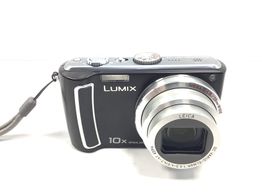
Panasonic Lumix DMC-TZ5: Una compacta travel zoom con buen estado general
Analizamos una unidad concreta de la Panasonic Lumix DMC-TZ5 que ha pasado por nuestro taller. Una compacta travel zoom de 2008 que, con 9,1 megapíxeles y un objetivo Leica 10x, sigue siendo una opción funcional para quien busca una cámara sencilla y ligera.