Panasonic Lumix DMC-FZ330: The Bridge Camera That Ages Gracefully
Bridge camera with constant f/2.8 Leica lens, in excellent condition and at a reasonable price
We review a specific unit of the Panasonic Lumix DMC-FZ330 that has passed through our workshop. A bridge camera with a constant f/2.8 Leica lens that remains a solid option for those seeking versatility without changing lenses.
- Constant f/2.8 Leica lens across the entire zoom range
- Good quality OLED electronic viewfinder for its class
- Excellent physical condition on this specific unit
- Price below the market average
- 1/2.3" sensor with obvious limitations at high ISO
- No standard flash hot shoe (uses proprietary connector)
- Contrast-detection autofocus, not the fastest for action
The Panasonic Lumix DMC-FZ330 is one of those bridge cameras that, despite the years, still has arguments to avoid falling into oblivion. Originally launched as the successor to the FZ200, its main selling point has always been that Leica DC Vario-Elmarit lens with a constant f/2.8 aperture across the entire 24-600 mm equivalent zoom range. It’s not a new camera, and that shows in certain aspects, but it remains a reasonable option for those looking for a single camera that covers everything without carrying a lens system.
Today we have a specific unit in the workshop, identified by internal ID 6a0ebcfa6ef56c5bb4151f66, which arrived in a physical condition that pleasantly surprised us. We’ve inspected it thoroughly and here are our impressions, both of this particular unit and of the model in general, because some things belong to this camera and others to this unit.
Details of this unit
| Detail | Value |
|---|---|
| Shutter count | Not available |
| Battery health | Not available |
| Condition grade | B |
| Physical condition | Excellent |
| Lab observations | No issues with sensor, AF, video, or screen |
| Included accessories | None |
| Selling price | €439 |
| Market average price (30 days) | €449 |
| Units available | 2 |
This specific unit arrived in a physical condition we rate as excellent. The body shows no significant dents or scratches, the dials turn with the right resistance, and the lens zoom ring moves smoothly. In the lab, we detected no sensor problems, autofocus responds within expectations for this model, video records without anomalies, and the screen has no dead pixels or marks. In short: a unit that had a careful owner or has spent little time in circulation.
The model in general
The FZ330 mounts a 1/2.3” CMOS sensor with 12 effective megapixels. It’s a small sensor, the kind no longer used in new cameras in this category, and that affects performance in low-light conditions. At ISO 800, chroma noise starts to become noticeable, and at ISO 1600, the loss of detail is evident. It’s not a camera for night photography without a tripod, and it’s worth knowing that before buying.
Autofocus is contrast-detection, with 49 points. It works well in good light and with static subjects, but it’s not especially fast or tenacious when tracking moving subjects. For wildlife or sports photography, there are better options even in the same second-hand segment. That said, manual focus with focus peaking is useful and well implemented.
Ergonomics is one of the model’s strong points. The body is large by today’s standards, but that allows for a deep, comfortable grip, with well-placed controls. The 1.44-million-dot OLED electronic viewfinder is decent, without being spectacular, and the 3-inch tilting LCD screen with 1.04 million dots is useful for awkward angles. The constant f/2.8 Leica lens is, without doubt, the crown jewel: at 600 mm equivalent, you still get f/2.8, something very few bridge cameras can offer.
What works
The lens is the main reason to buy this camera. That 24-600 mm range with a constant f/2.8 aperture is an incredible amount of versatility. In the workshop, we’ve seen many bridge cameras, and few offer that combination. For travel, nature, or street photography, having 25x zoom in a single lens without changing lenses is a real advantage.
Video is also a strong point. It records 4K at 30p with a 100 Mbps bitrate, something that was cutting-edge in its day and remains perfectly usable today. The 5-axis stabilizer helps achieve acceptable handheld shots, and the built-in stereo microphone captures decent audio for home use. It’s not a cinema camera, but for occasional video, it more than delivers.
Overall build quality is solid. The body is sealed against splashes and dust, something you’ll appreciate if you use it outdoors. The dials and buttons have a proper feel, and Panasonic’s menu, though dense, is logical once you get used to it. The battery, with around 350 shots per charge in our tests, is enough for a day of moderate use.
What shows its age
The 1/2.3” sensor is the main limitation. Over the years, 1” sensors have dropped in price, and now you can find cameras like the Sony RX10 or the Panasonic FZ1000 at similar prices on the second-hand market, with clearly superior image quality. If image quality is your priority over zoom range, the FZ330 falls short.
Contrast-detection autofocus also feels dated. In low-light situations or with moving subjects, the camera hunts and searches before locking focus. It’s not unusable, but it requires patience and technique. For action photography, there are better options.
Another point to consider is that the FZ330 has no standard flash hot shoe. It uses a proprietary connector on top, which limits external flash options. If you need artificial lighting, you’ll have to look for Panasonic’s specific flash or use an adapter, which doesn’t always work well.
Who is this unit for?
This specific unit, with its excellent condition and price of €439 (€10 below the market average), is a good option for those looking for a versatile bridge camera without complications. If you’re the kind of person who wants a single camera for everything —landscape, portrait, some nature, occasional video— and you don’t mind accepting the small sensor’s limitations, this unit is a sensible purchase.
We don’t recommend it for those who already have experience with large-sensor cameras and are looking for a lightweight second camera: the image quality difference will be too obvious. Nor for action or sports photography, where the autofocus will fall short. But for users coming from a smartphone or a basic compact who want to step up to something more serious without changing lenses, the FZ330 remains a reasonable entry point.
Verdict
The Panasonic Lumix DMC-FZ330 is a camera that has aged with dignity, but it can’t hide its age. The constant f/2.8 Leica lens remains a compelling argument, and this specific unit is in excellent condition that invites use. The price of €439 is fair, slightly below the market average, and the offer is reasonable if you understand its limitations.
If you’re looking for an all-round bridge camera with a massive zoom range and you’re not put off by the small sensor, this unit is a good buy. If image quality is your absolute priority, there are alternatives with 1” sensors at similar prices, though you’ll lose that wide zoom range. In any case, this specific unit won’t give you problems: it’s in a condition we don’t see every day in cameras of this age.
Afiliación interna declarada. Camera Market Reviews es el blog de Camera Market. Si compras a través de este enlace lo verás en tu factura como compra directa al marketplace — no hay intermediarios ni comisiones para terceros. Lee la política completa.
Reviews relacionadas

Blackmagic Design Pocket Cinema Camera: una unidad impecable para quien busca cine RAW sin concesiones
Esta unidad concreta de la Blackmagic Pocket Cinema Camera llega en estado excelente, sin desgaste físico apreciable. Un modelo que, incluso hoy, ofrece una calidad de imagen RAW que pocas cámaras de su precio pueden igualar, aunque con limitaciones de autonomía y enfoque que hay que conocer.

Blackmagic Design Blackmagic Design Pocket Cinema 6K
Analizamos una unidad concreta de la Blackmagic Pocket Cinema 6K, una cámara de cine con sensor Super35 y montura Canon EF que ha pasado por nuestro taller. Descubre su estado real y si merece la pena en 2026.
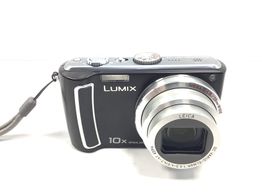
Panasonic Lumix DMC-TZ5: Una compacta travel zoom con buen estado general
Analizamos una unidad concreta de la Panasonic Lumix DMC-TZ5 que ha pasado por nuestro taller. Una compacta travel zoom de 2008 que, con 9,1 megapíxeles y un objetivo Leica 10x, sigue siendo una opción funcional para quien busca una cámara sencilla y ligera.